Draenor, corruption and conquest
Orc clans on Draenor were manipulated into drinking demon blood and transformed into an invading army. The legacy of that enslavement—lost traditions, ruined worlds and inherited guilt—would define generations.
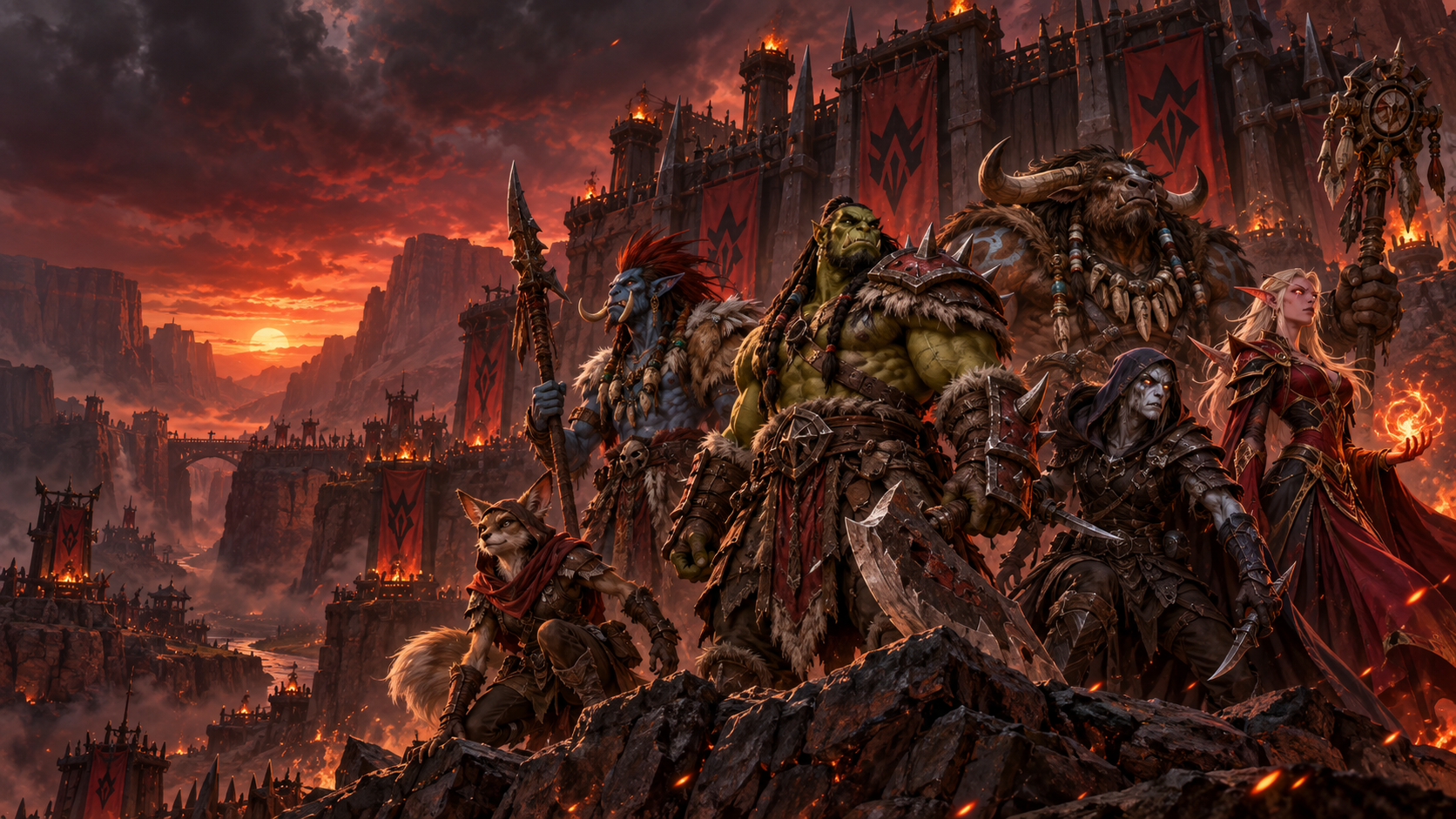
Chronicle of a restless alliance
A field guide, not a complete codex
The Horde's history is a cycle of captivity, liberation, belonging and fracture. Its greatest stories ask the same question in different forms: can peoples built for survival become something more than the wars that shaped them?
Orc clans on Draenor were manipulated into drinking demon blood and transformed into an invading army. The legacy of that enslavement—lost traditions, ruined worlds and inherited guilt—would define generations.
Raised in human captivity, Thrall escaped, restored shamanic practice and gathered the scattered clans. His Horde sought survival rather than conquest, eventually crossing the sea toward Kalimdor.
In Kalimdor, the orcs allied with the Darkspear trolls and tauren. Orgrimmar rose in a harsh land chosen partly as penance—a capital built to prove that hardship could be endured without returning to demonic chains.
The Forsaken joined from political necessity, the blood elves sought allies after catastrophe, and the Bilgewater goblins brought invention, commerce and chaos. The Horde became less a single culture than a volatile federation.
Garrosh Hellscream turned legitimate pride into ruthless supremacy. The rebellion against him showed that loyalty to the Horde could require defying its Warchief when leadership betrayed the coalition's people.
Sylvanas Windrunner's rule drove the faction into another moral crisis. Her choices forced Horde leaders and soldiers to confront whether survival alone could justify atrocity—or whether honor demanded resistance.
The Horde Council reflects a hard lesson: no single voice should hold every people hostage. Its future remains imperfect, but shared leadership offers a chance to make “strength in unity” more than a slogan.
Horde honor is deliberately contested. For some, it is courage and keeping one's word. For others, it is loyalty to clan or leader. The faction's most compelling conflicts emerge when these definitions collide—especially when obedience threatens the innocent or survival demands compromise.
The Horde endures because it gives displaced peoples a banner beneath which they can refuse extinction. At its best, it offers chosen kinship. At its worst, fear and grievance make it vulnerable to leaders who promise unity through domination. Both truths are essential to understanding it.